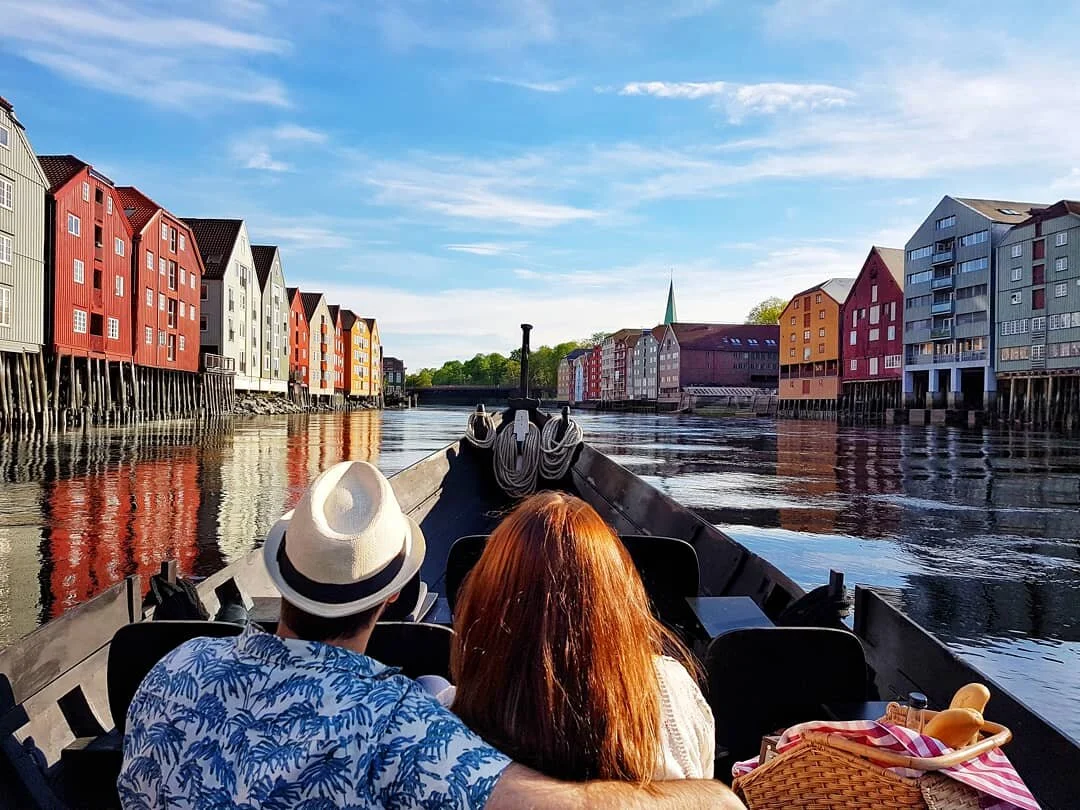
A city shaped by war—seen from land and water.
Trondheim was occupied from April 1940 until liberation in May 1945. Its harbour, railway connections and position on the coast made the city strategically important to the German occupying forces. Military plans changed neighbourhoods, shorelines and the lives of the people who lived here.
Our journey begins on foot. Through locations in the city centre, your guide tells of occupation, resistance, collaboration and daily life under wartime rule. These are not distant stories: many unfolded in buildings and streets that still form part of modern Trondheim.
We then continue by boat. From the river, canal and harbour, the city's maritime geography becomes clear. Toward Nyhavna stands Dora I, the vast concrete submarine bunker begun in 1941 and completed in 1943. Dora II was started but never finished. Their scale reveals the ambitions of the German naval project—and the human and physical cost behind it.
This is storytelling—not spectacle.
The tour addresses occupation, persecution, forced labour, resistance and collaboration with respect for those who experienced them. Our aim is to make the history understandable, honest and connected to the places around us.
Connect people and events to the streets and buildings where wartime Trondheim unfolded.
Understand how the river, canal, port and fjord shaped the city's strategic importance.
View the monumental remains of the German submarine base at Nyhavna from the maritime side.
The story and pace can be adjusted for tour groups, educational visits and specialist interests.